
Master of Science in Statistics and Data Science
Gain advanced expertise in statistics, cutting-edge AI, and hands-on data science so you can drive innovation across technology, finance, healthcare, pharmaceuticals, and government.
Program Overview
The Master of Science in Statistics and Data Science at Loyola Marymount University in Los Angeles prepares you to thrive in a world increasingly shaped by data, analytics, and artificial intelligence. Through a rigorous blend of statistical theory, machine learning, deep learning, large language models, and applied data science, you'll learn to transform complex data into actionable insights.
With a strong foundation in statistics and data science and the flexibility to choose interdisciplinary electives in computer science, business, economics, and environmental science, you can tailor your graduate experience to your professional interests and career goals.
At LMU, you'll benefit from small classes, personalized mentorship from faculty researching machine learning, AI, biostatistics, and other emerging areas of data science, along with a curriculum that emphasizes the ethical and responsible use of AI, data collection, and data analysis.
You'll graduate with the technical expertise, practical experience, and critical thinking skills to solve complex problems and advance your career in technology, finance, healthcare, pharmaceuticals, government, marketing, and other data-driven industries.
Key Facts
Program Length: 2 years
Format: In-person
Class Times: Weekdays and weeknights
Units: 30
Application Deadline: July 1 (Fall); November 1 (Spring)
Why Choose LMU
Small Classes and One-on-One Mentorship
With a 13:1 student-to-faculty ratio, you will experience a highly personalized learning environment. Your professors know your name, your interests, and your professional goals. You’ll build meaningful connections through close faculty interactions.
Master the Mathematics Behind AI
Develop expertise in the statistics, mathematics, and data science that power modern AI systems. By understanding the foundations behind machine learning and large language models, you'll be prepared to adapt as technologies evolve and new tools emerge.
Learn from Faculty Leading Data Science Research
LMU faculty are researching how statistics, machine learning, and AI can be used to predict disease risk, advance pharmaceutical research, understand the effects of public policies, and analyze social media and sports data. You'll learn from experts whose work connects cutting-edge research with real-world applications across healthcare, technology, public policy, and pharmaceuticals.
Courses Tailored to Your Career Goals
Customize your studies through interdisciplinary electives in computer science, business analytics, economics, and environmental science. Whether you're interested in AI, healthcare, business intelligence, social science, or environmental data, you can develop specialized expertise in the fields that matter most to you.
A Focus on Data Science for the Common Good
Data and AI shape decisions that affect people, communities, and society. At LMU, you'll explore issues of fairness, data justice, privacy, and responsible AI while learning how to use data ethically and in service of the common good.
Study in a Dynamic Los Angeles Market
The demand for professionals with advanced training in statistics, data science, and AI continues to grow across Southern California and beyond. From LMU's Los Angeles campus, you'll develop skills that translate across industries including technology, healthcare, biotech, aerospace, entertainment, and business analytics.
What You'll Learn
In LMU's Statistics and Data Science graduate program, you'll develop expertise in statistics, machine learning, artificial intelligence, and computational methods. The curriculum combines rigorous theoretical foundations with hands-on application, preparing you to translate data into meaningful insights and informed decisions.
As a graduate of LMU’s Statistics and Data Science master’s program, you will be able to:
- Demonstrate a deep understanding of probability and statistical theory as the foundation for statistical inference
- Apply linear algebra, gradient-based methods, and optimization theory as essential foundations for representation learning and model training in machine learning and deep learning
- Manage complex and large-scale datasets and apply programming tools such as R and Python to implement statistical and machine learning methods efficiently
- Formulate research questions, apply appropriate analytical methods, and conduct independent or collaborative research projects to address real-world problems in fields such as biomedical science, business, social science, and environmental studies
- Communicate statistical and analytical findings clearly and effectively through oral presentations, written reports, and data visualizations
- Recognize ethical issues in data collection, analysis, and reporting, and apply principles of privacy, reproducibility, and responsible AI
Statistics and Data Science Program Structure
The Statistics and Data Science program requires 30 units and is broken into two main sections: required courses (16 units) and electives (14 units). You can choose from courses like Statistical Theory, Machine Learning, Data Mining and Pattern Analysis, Advanced Econometrics, and more.
Learn more about the Statistics and Data Science curriculum and courses.
Additional Statistics and Data Science Programs

In addition to the M.S. in Statistics and Data Science, LMU offers a fast-tracked graduate program for current LMU students.
LMU Accelerated Master’s Program for Current Students
If you’re a current LMU undergraduate student, you can enroll in LMU’s Accelerated Master’s Program and earn your master’s in statistics and data science in just a year. Learn more about how you can save time and money through LMU's Accelerated Master's Program.
Statistics and Data Science Outcomes

Career Opportunities
LMU’s Master of Science in Statistics and Data Science prepares you for careers in statistical modeling, data science, econometrics, machine learning, artificial intelligence, and analytics.
Industry areas include:
- Technology and software
- Healthcare and biotechnology
- Pharmaceuticals
- Finance and insurance
- Government and public policy
- Marketing and consumer analytics
- Business and management consulting
- Environmental and geospatial analytics
Career paths include:
- Data Scientist
- Data Analyst
- Statistician
- Business Analyst
- Marketing Analytics Analyst
- Machine Learning Engineer
- Quantitative Analyst
Faculty Spotlight
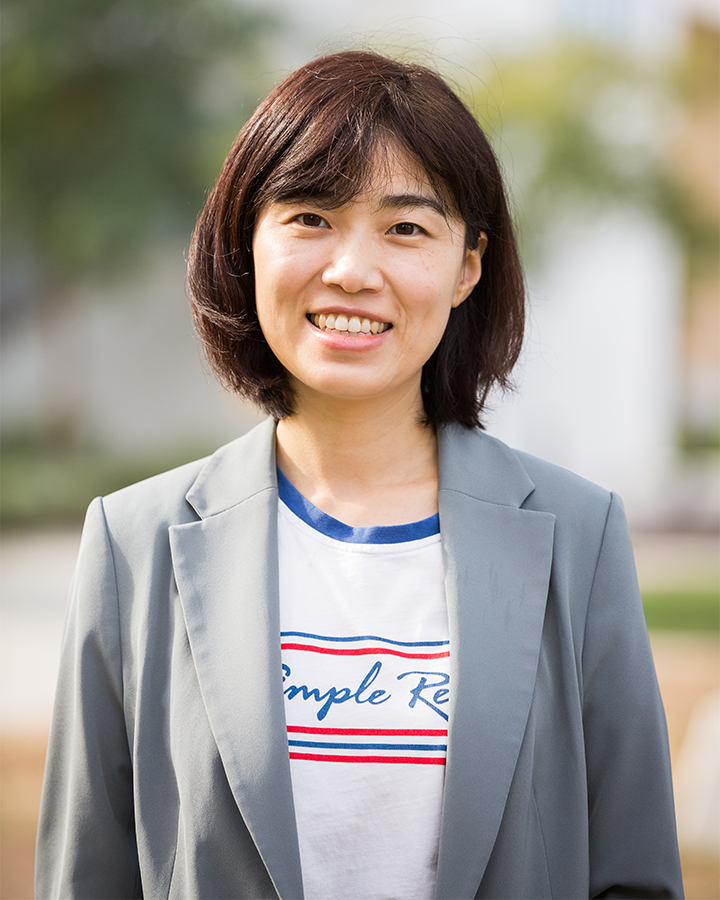
Le Wang Uses Statistics to Advance Healthcare Research
Professor Le Wang's research focuses on risk prediction, selection bias, and efficient sampling designs, with applications in breast cancer, Alzheimer's disease, cardiovascular disease, and other areas of biomedical research.

Junyuan Lin Advances AI and Machine Learning Research
Professor Junyuan Lin's research bridges computational mathematics and theoretical machine learning with real-world applications in social media analysis, sports analytics, and pharmaceutical research.

Thomas Laurent Explores the Mathematics Behind AI
Professor Thomas Laurent's research explores how modern AI algorithms work and how generative AI can be applied to challenges such as materials discovery, energy storage, and clean energy.

Junhui Yang Applies Statistics to Public Policy
Professor Junhui Yang develops statistical methods that help researchers understand whether policies, treatments, and interventions are making a meaningful difference, with applications in social science and earthquake engineering.
Admission and Application

The master’s program in Statistics and Data Science at LMU can be started in the fall or spring semester. Note: Applications submitted after the listed deadlines may still be considered and reviewed on a case-by-case basis.
Application Deadlines
- Fall Semester - July 1
- Spring Semester - November 1
Application Requirements
- A completed Online Application and $50 application fee
- Official transcripts of all colleges and universities attended
- A personal statement (1-2 pages) discussing how the graduate program fits the applicant’s career goals
Find the full admission requirements for the Statistics and Data Science program, including academic requirements, transfer credit, and deferment policies, on the LMU Bulletin.
Tuition
The LMU Statistics and Data Science graduate program is 30 units total. To calculate tuition costs, view the LMU Controller website for the latest academic year’s tuition cost per unit.
Take the Next Step
Sign up to receive information about our graduate programs and important admission announcements.